Science
Epithelial biology is where protection and transformation meet
Epithelial tissue is a boundary system. It protects, lines, contains, and regulates.
That makes it biologically important on its own. It also makes it a meaningful place to study how tissue moves from defense to disease.
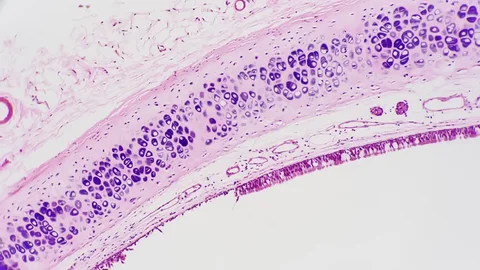
Why epithelial biology matters
Epithelial tissue is one of the body's most exposed and dynamic systems. It covers surfaces, lines cavities, and helps regulate the interface between internal biology and the external world. Because these tissues are constantly renewing and adapting, they are central to understanding how normal tissue states can shift toward disease.
This makes epithelial biology strategically important in cancer research. If the majority of cancers arise from epithelial origin, then epithelial systems are not a side topic in oncology. They are one of its biological starting points.
Why pathology sees so much here
Pathology preserves architecture, neighborhood effects, and visible consequences of biological change in a single view.
For epithelial systems, that means morphology and context can be studied together rather than in isolation.
- Cellular arrangement
- Tissue architecture
- Local biological context
See the modeling approach
Pathelium uses epithelial biology as the scientific basis for its foundation-model program.