Whole-slide tissue understanding
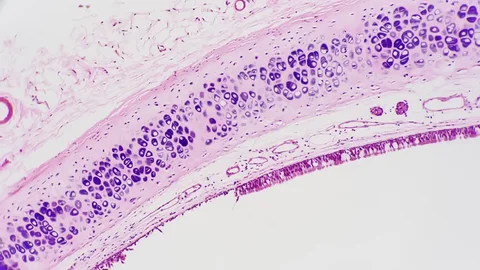
Learn directly from large-scale pathology slides instead of reducing epithelial biology to isolated image fragments.
Platform
An intelligence platform for epithelial biology.
Epithelia AI is Pathelium's platform for learning from the tissues where most cancers begin. It is designed to turn epithelial morphology, tissue architecture, and linked biological signals into usable intelligence for research, discovery, and future clinical systems.
Rather than treating pathology as a static image problem, Epithelia AI is built around the idea that epithelial tissue contains layered information about protection, stress, repair, transformation, and disease progression. Our platform is designed to model those patterns at scale.
Epithelia AI brings together whole-slide pathology, tissue representations, multimodal biological context, and foundation-model learning to help reveal how epithelial systems change over time.

Learn directly from large-scale pathology slides instead of reducing epithelial biology to isolated image fragments.
Build reusable tissue representations that capture structure, morphology, and state across epithelial systems.
Align visual tissue information with pathology reports, molecular signals, and structured clinical context.
Create a reusable intelligence layer that can support downstream research workflows now and future clinical systems over time.
Pathelium starts with epithelial biology because carcinomas are the most common cancers and because epithelial tissue holds a readable record of how protection becomes disease.
That choice gives the platform a scientific center of gravity. It also keeps the product grounded in tissue, not software abstraction.
Epithelia AI is Pathelium's product expression of epithelial intelligence in oncology.